OpenNews Unconference on Journalism Tech 2019
I returned to the OpenNews unconference on journalism and technology this year to facilitate a discussion on the topic of project initiation.
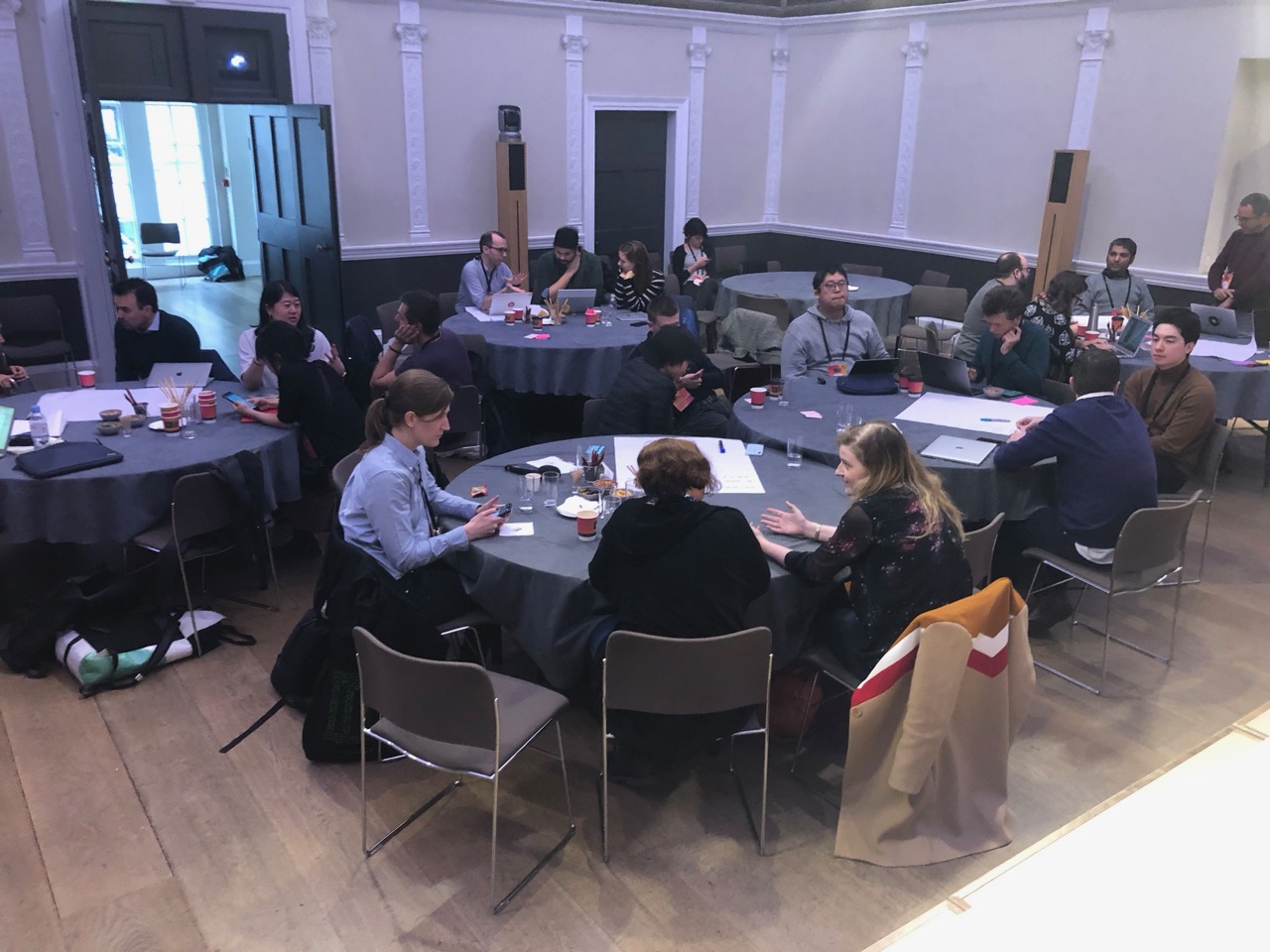
The start of any project is particularly important in determining its subsequent success. Project initiation takes many different forms though: from drafting formal pitches that are then scored according to structured categories, to casual conversations sparking an idea that gathers momentum and becomes a project without anyone consciously deciding to make it a project.
The workshop was intended to draw out people’s experience and stories and provide a space to learn from each other about what challenges are particularly difficult at the start of a project as well as what tactics and techniques work in addressing those challenges.
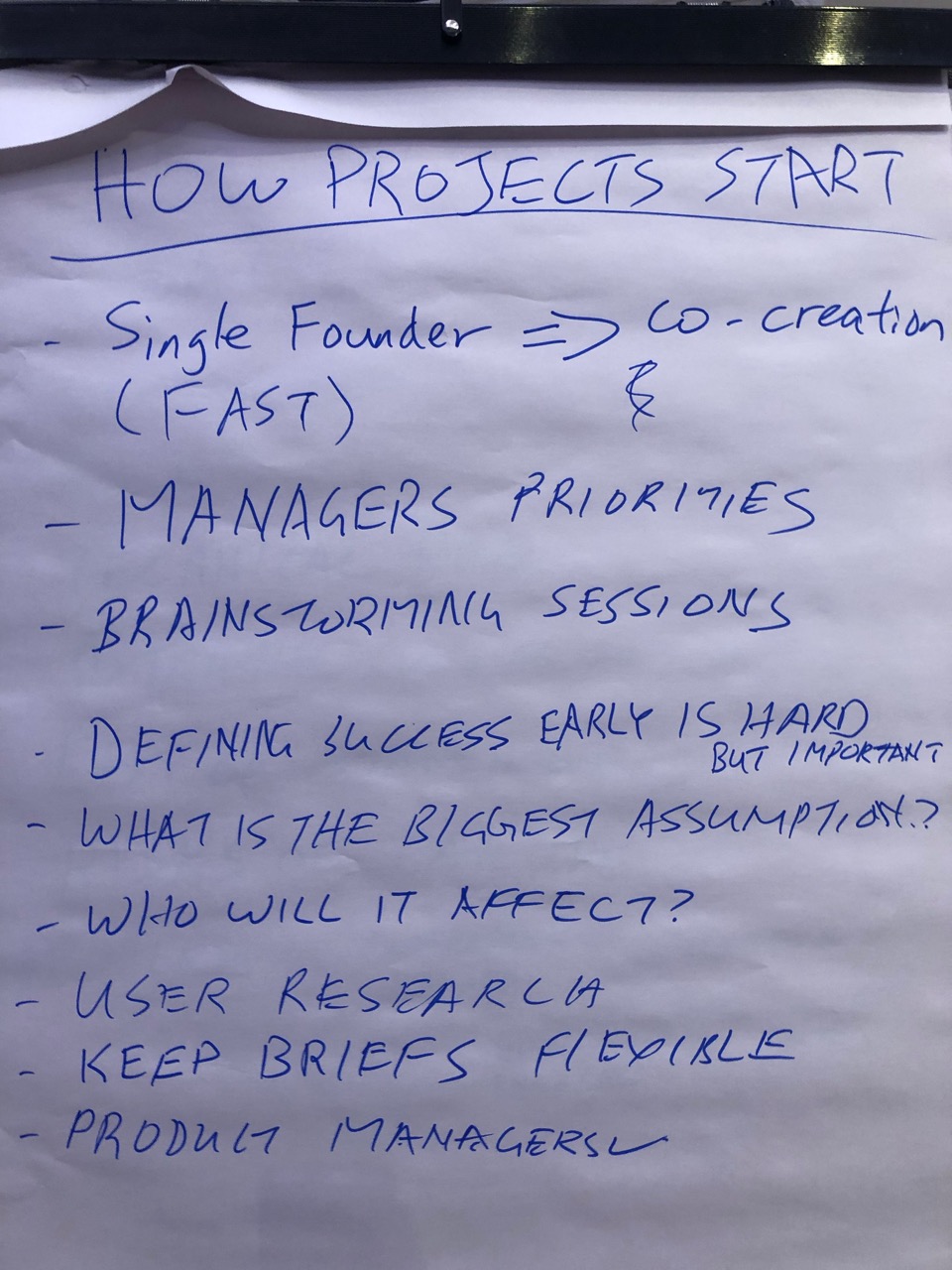
Projects start in different ways, from a single visionary or founder coming up with an idea, to projects emerging from organisational priorities, to regularly-scheduled brainstorming sessions. It was particularly interesting to hear some participants say they are actively thinking about how to shape the start of a project (moving from single visionary with an idea, to a process of co-creation)
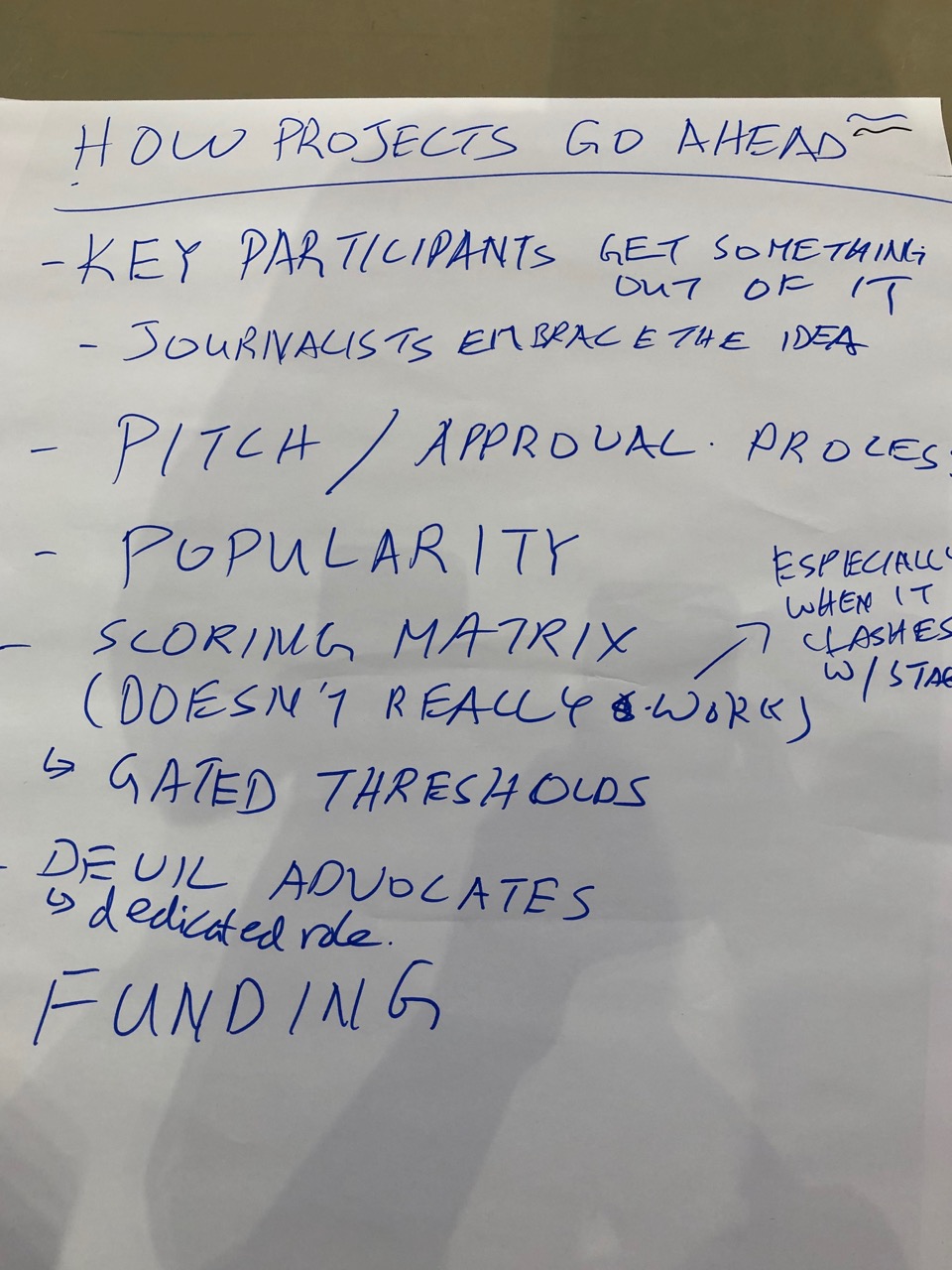
Likewise, participants named a wide range of reasons for why certain projects go ahead. There wasn’t much discussion around whether a particular approval or selection mechanism is better (other than a near-universal scepticism about the effectiveness of formal scoring systems). Instead, these were mostly seen as ‘just how things work’ in a given organisation or industry, or as tactics to ensure your project would go ahead.
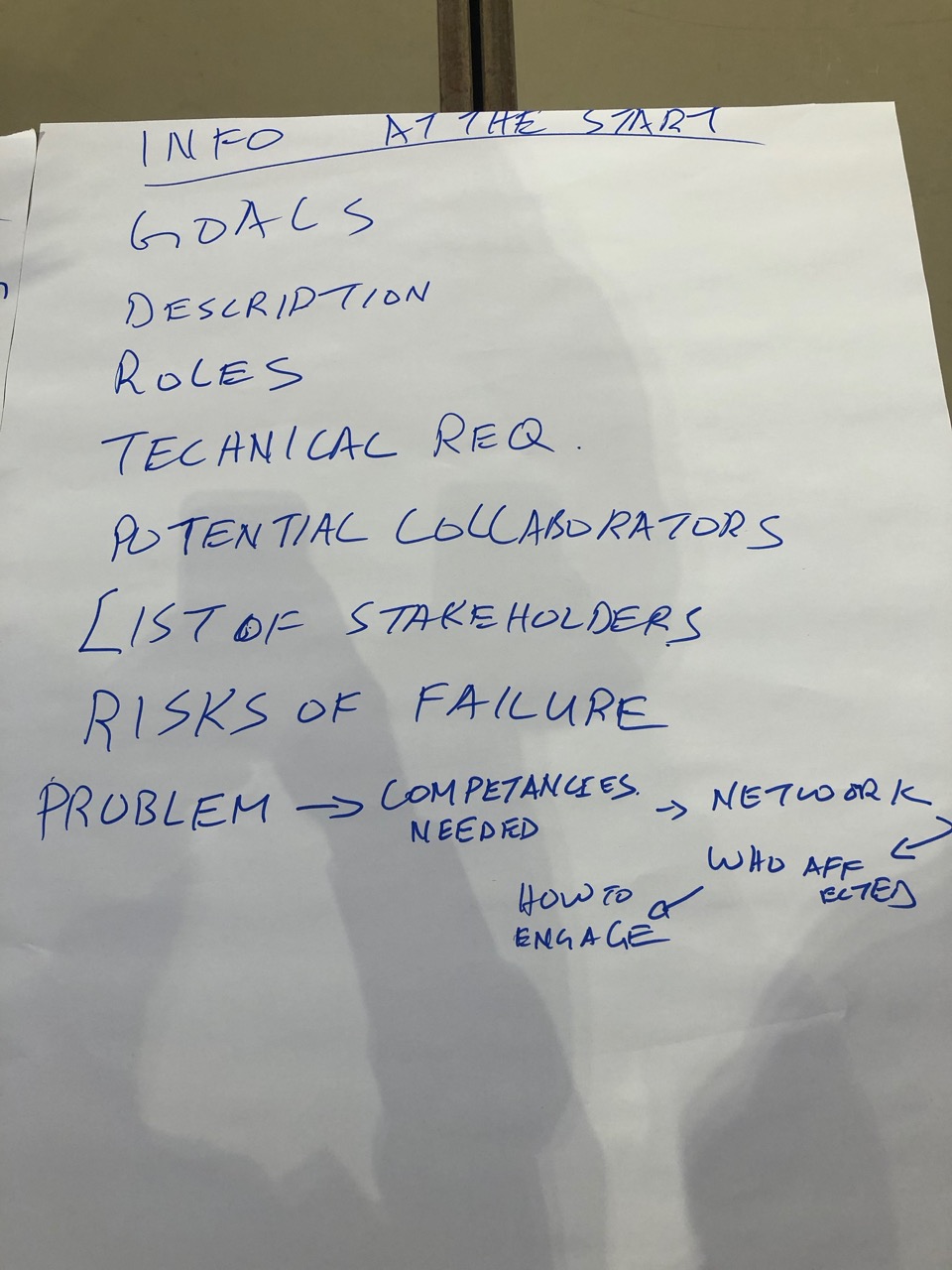
There was quite a bit of agreement about what are the important information to capture at the start of a project
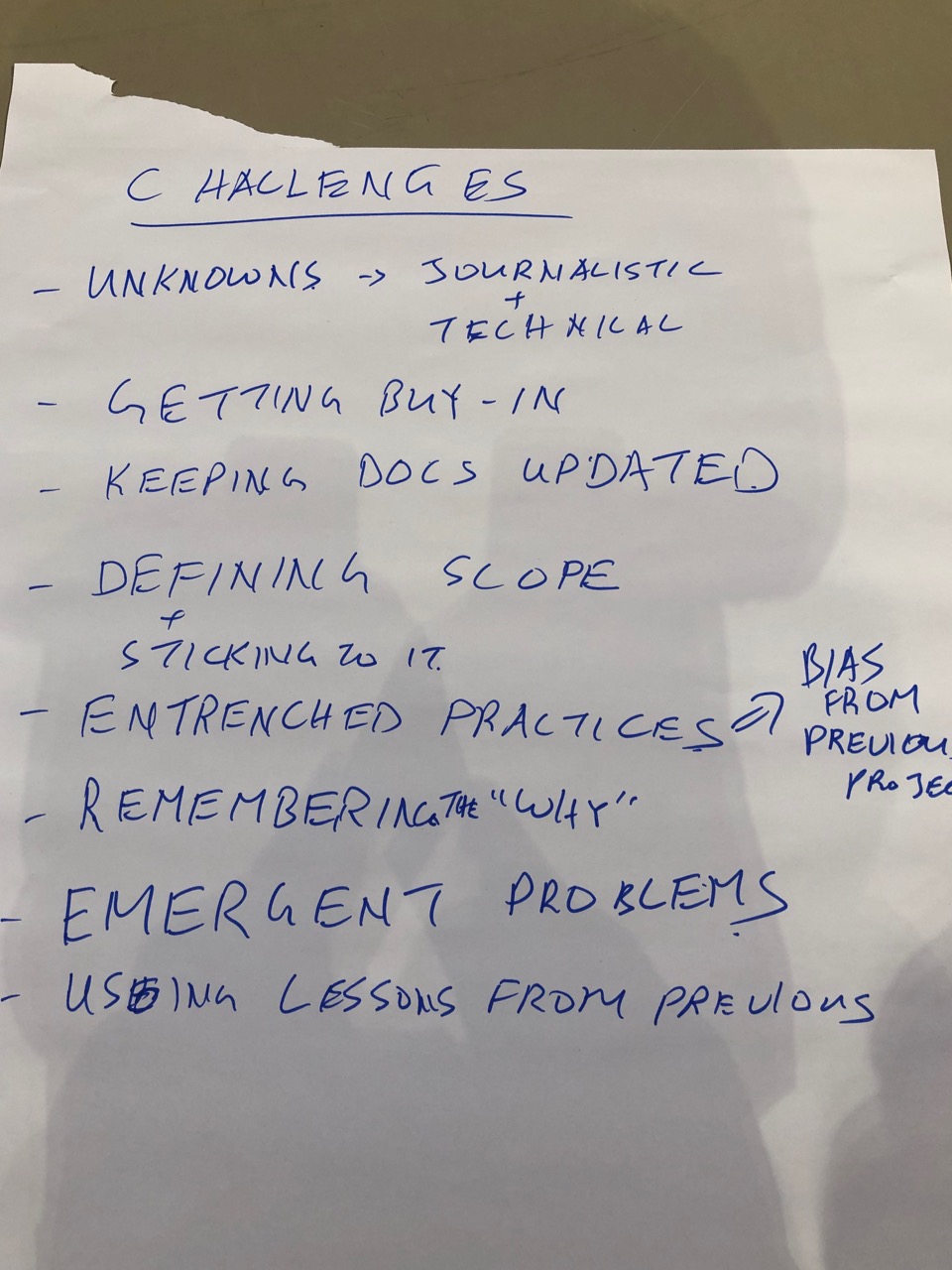
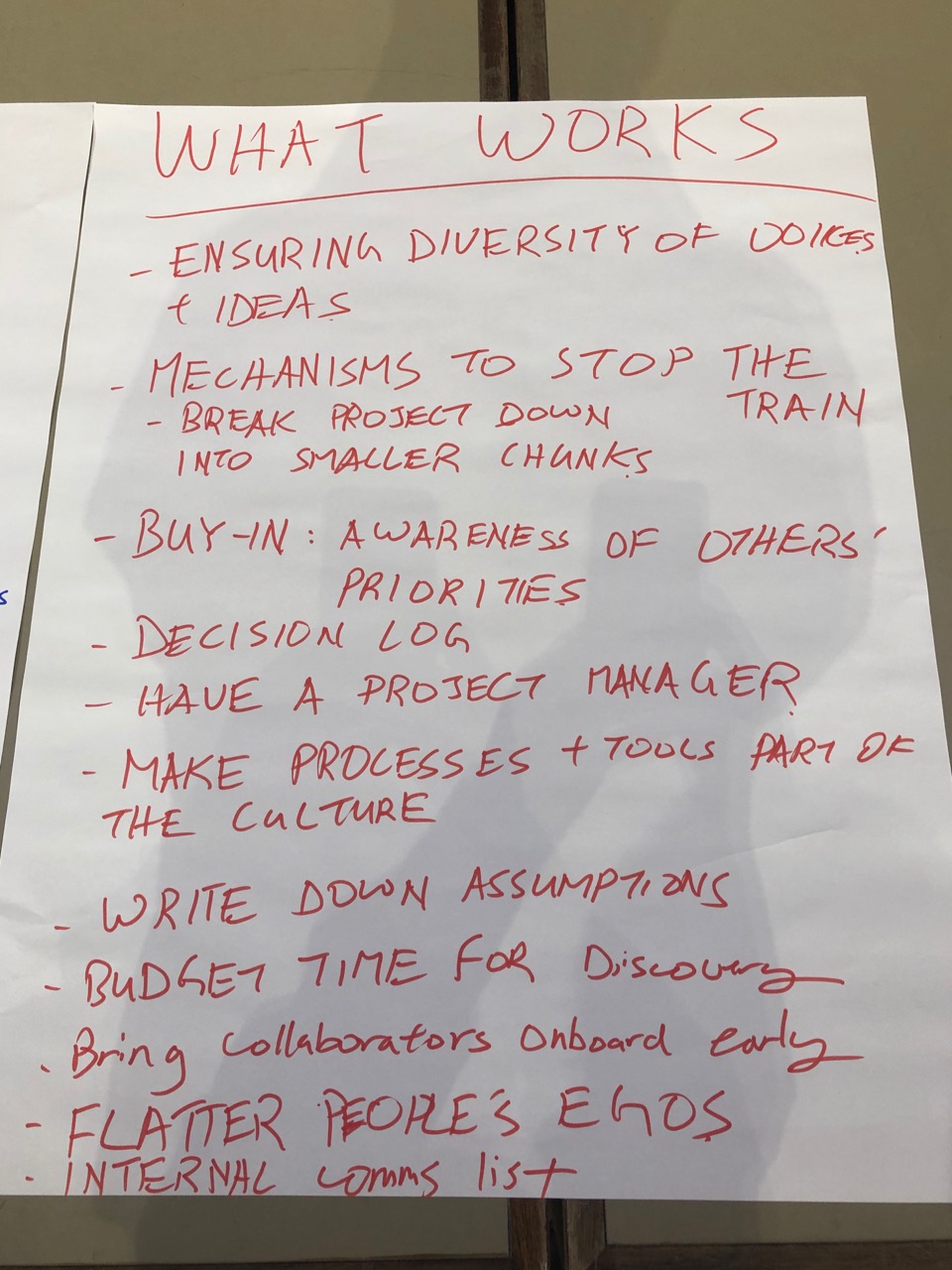
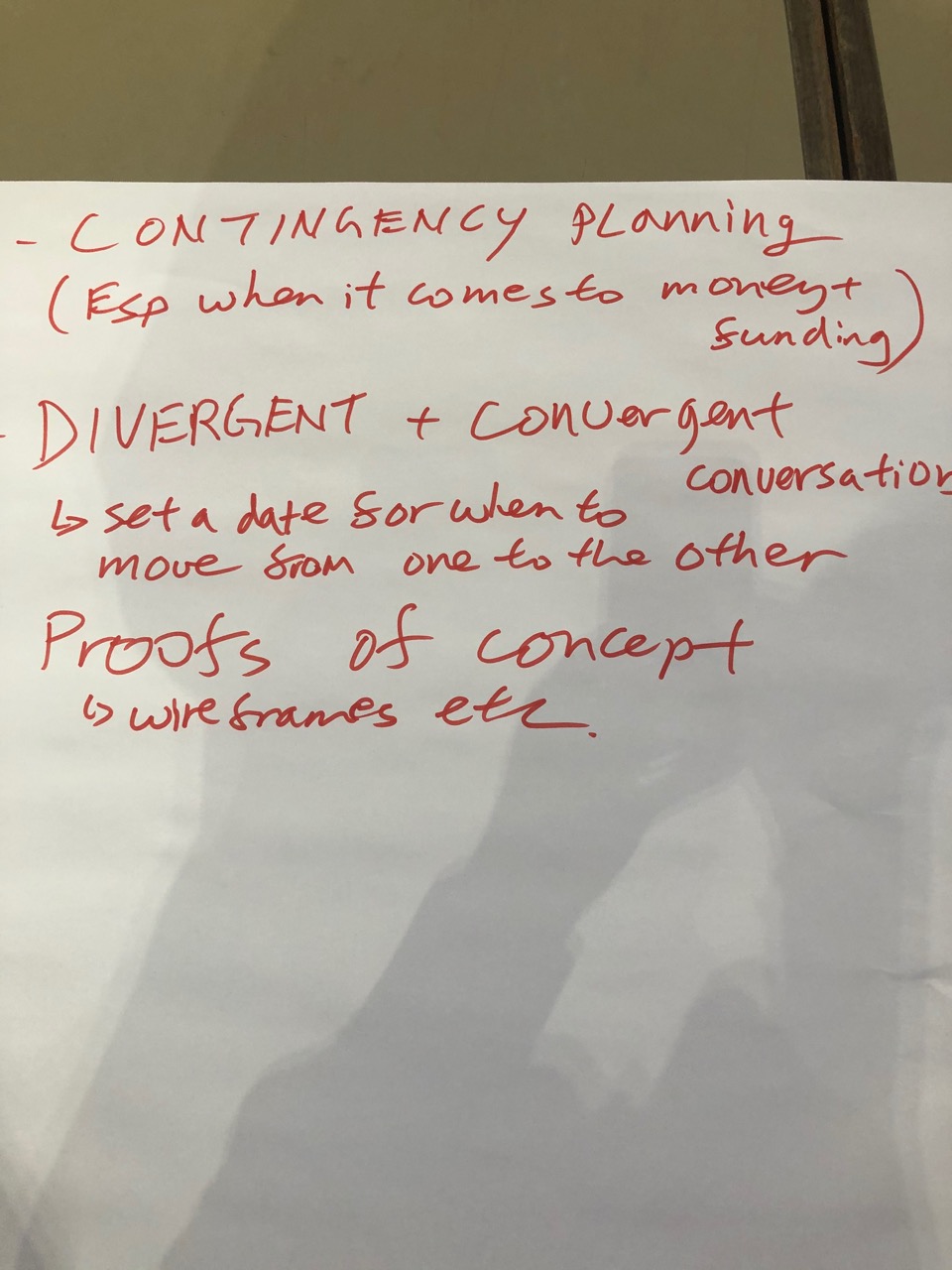
We then brainstormed a list of challenges peculiar to the project initiation phase. This list served as the prompt for smaller group discussions about how to address these challenges. I found the tips about contingency planning and keeping a decision log particularly helpful: